
A Blockchain Loyalty Program for Small Businesses replaces traditional databases with tokenized digital assets and smart contracts to lower costs and improve transparency. These programs allow customers to securely hold, trade, or redeem rewards through no-code platforms and digital wallets. This technology fosters deeper customer engagement by transforming static points into versatile digital assets that offer real-world value.
Most local business owners face a frustrating reality where customers visit once and never return; this happens because traditional punch cards are frequently lost in wallets or forgotten in junk drawers. These fragmented systems fail to build true loyalty in a digital economy dominated by corporate giants with massive tech budgets. To compete effectively, small businesses must pivot toward a more sophisticated model that transforms rewards into tangible digital assets. This article explores how blockchain technology converts loyalty from a static expense into a dynamic, shared ecosystem that drives recurring revenue. You will learn why paper based systems are obsolete, the mechanics of how tokenized rewards function in a local context, and the exact roadmap required to implement a modern loyalty strategy that keeps your customers coming back.
Why Traditional Punch Cards are Failing Local Shops
Walk into any local cafe in Esposende or a boutique in Braga, and you will likely see a familiar sight: stacks of paper punch cards by the register. While these systems served a purpose for decades, they are increasingly disconnected from how modern consumers live. The average customer today is fatigued by fragmentation. Carrying twenty different physical cards is a burden, and most are lost, forgotten, or left at home exactly when they are needed. Even siloed digital apps often fail to solve the core issue, as phone storage is at a premium and users rarely want to download a separate application for every shop they visit.
For the business owner, the limitations of these traditional schemes are even more severe. Analog systems operate in a data vacuum. A paper card cannot tell you when a customer is about to churn or what specifically motivates their return. It provides no insights into demographics or spending patterns, making it nearly impossible to build a sophisticated or personalized marketing strategy. This lack of visibility keeps local shops in a reactive state rather than a proactive one.
Modern consumers now expect a shared digital rewards ecosystem that offers real, tangible value without the friction of physical tracking. They want rewards that feel like digital assets rather than temporary marketing gimmicks. This shift in expectation is precisely why a Blockchain Loyalty Program for Small Businesses is becoming the new standard. By moving away from isolated, analog systems, merchants can finally capture the data they need while providing the seamless experience their customers demand. To learn more about how this infrastructure is built, you can read about the RONIN network or even explore how to become a country partner to help scale this network globally.
What is a Blockchain Loyalty Program for Small Businesses?

To understand a Blockchain Loyalty Program for Small Businesses, think of it as moving from a private notebook held by a single merchant to a shared digital ledger that is verifiable across an entire network. In a traditional system, your points are merely entries in a company's private database. If that business changes its terms or closes its doors, those points effectively disappear. Blockchain changes this dynamic by ensuring that rewards are real, secure, and owned by the customer rather than the business.
This transition is achieved through tokenization. Through this process, a standard loyalty point is transformed into a digital asset like the RONET token. Unlike a physical punch on a card or a digit in a siloed app, a token is a piece of code that exists independently of any single store's internal software. When a customer earns RONET, it is deposited into their digital wallet. Because it lives on a shared ledger, the reward remains valid and accessible even if the merchant updates their internal management tools or changes their point of sale system.
The primary difference between this and a standard database is transparency and interoperability. A typical database is a silo; it cannot communicate with other businesses without expensive, custom integrations. A blockchain based shared digital rewards ecosystem allows for a level of security that prevents fraud and double spending without requiring manual oversight. It treats a loyalty reward like a digital asset, giving it value that is recognized by other partners in the network. This infrastructure allows local merchants to offer a sophisticated reward that remains relevant to the consumer long after they leave the shop. To dive deeper into how this technology creates a more equitable landscape for local merchants, you can read more about the RONIN network. For those looking to bring this technology to their own region, there are opportunities to become a country partner and lead the expansion of this decentralized infrastructure.
The Power of the Shared Rewards Ecosystem
The true innovation of a Blockchain Loyalty Program for Small Businesses lies in its ability to break down the walls between independent shops. In a traditional setup, a café in Esposende operates as an island; if a customer visits a nearby gym or a restaurant in Braga, the café gains nothing. A shared digital rewards ecosystem changes this by creating a unified network where businesses collaborate to keep value within the community. When a customer earns RONET at their morning fitness class, that same digital asset remains in their wallet as they walk past a local bistro or boutique, incentivizing them to stop in and spend.
This dynamic creates a powerful Network Effect. Instead of fighting for a larger slice of a small pie, merchants work together to grow the pie itself. If five businesses on the same street use the same infrastructure, they collectively offer a loyalty experience that rivals massive international chains. A small pastry shop can provide the same seamless, high-tech reward feel as a global coffee conglomerate, but with the personal touch and authenticity of a local owner.
Because these rewards are verifiable and interoperable, the risk to the merchant is minimized. You are not just building a list of your own customers; you are tapping into a pre-existing pool of active, reward-holding consumers within the region. This interconnectedness is why we are actively looking for those who want to become a country partner to manage and grow these local clusters. By participating in this decentralized infrastructure, small businesses move from a position of isolation to one of collective strength. You can read more about the RONIN network to see how this collaborative model is being deployed globally.
Key Benefits: From Recurring Revenue to Data Insights

Shifting from a collective community model to the internal operations of a single storefront reveals immediate, measurable advantages. Implementing a Blockchain Loyalty Program for Small Businesses provides a sophisticated toolkit that was previously only available to multi-national corporations with massive R&D budgets. Because these platforms are typically no-code, they are accessible to non-technical owners who need to focus on their daily operations rather than software development.
The primary benefits focus on stabilizing cash flow and securing the merchant’s digital perimeter:
Increased Customer Lifetime Value (CLV): By transforming points into RONET tokens, rewards become gamified assets. Customers are more likely to return when they see a tangible balance in their digital wallet, as the psychological value of a verifiable asset far exceeds that of a disappearing digital tally.
Reduced Operational Overhead: Developing a custom loyalty application can cost tens of thousands of Euros in development and ongoing maintenance. Leveraging a shared digital rewards ecosystem allows merchants to bypass these costs entirely by using a plug and play infrastructure.
Immutable Fraud Prevention: Paper cards are easily duplicated, and even centralized databases are vulnerable to internal manipulation or external breaches. Blockchain creates an immutable record for every transaction, ensuring that every token issued is legitimate and every redemption is authorized.
Privacy-First Data Insights: Unlike invasive tracking cookies, blockchain rewards provide deep insights into spending patterns and network-wide behavior. Merchants can identify top-tier customers and churn risks without requiring the consumer to surrender sensitive personal information.
By utilizing the existing infrastructure about the RONIN network, business owners in regions like Braga or Esposende can focus on their craft while the technology handles the heavy lifting. For those interested in scaling these advantages across an entire region, there are opportunities to become a country partner to lead local implementation.
How Customers Interact with Tokenized Rewards
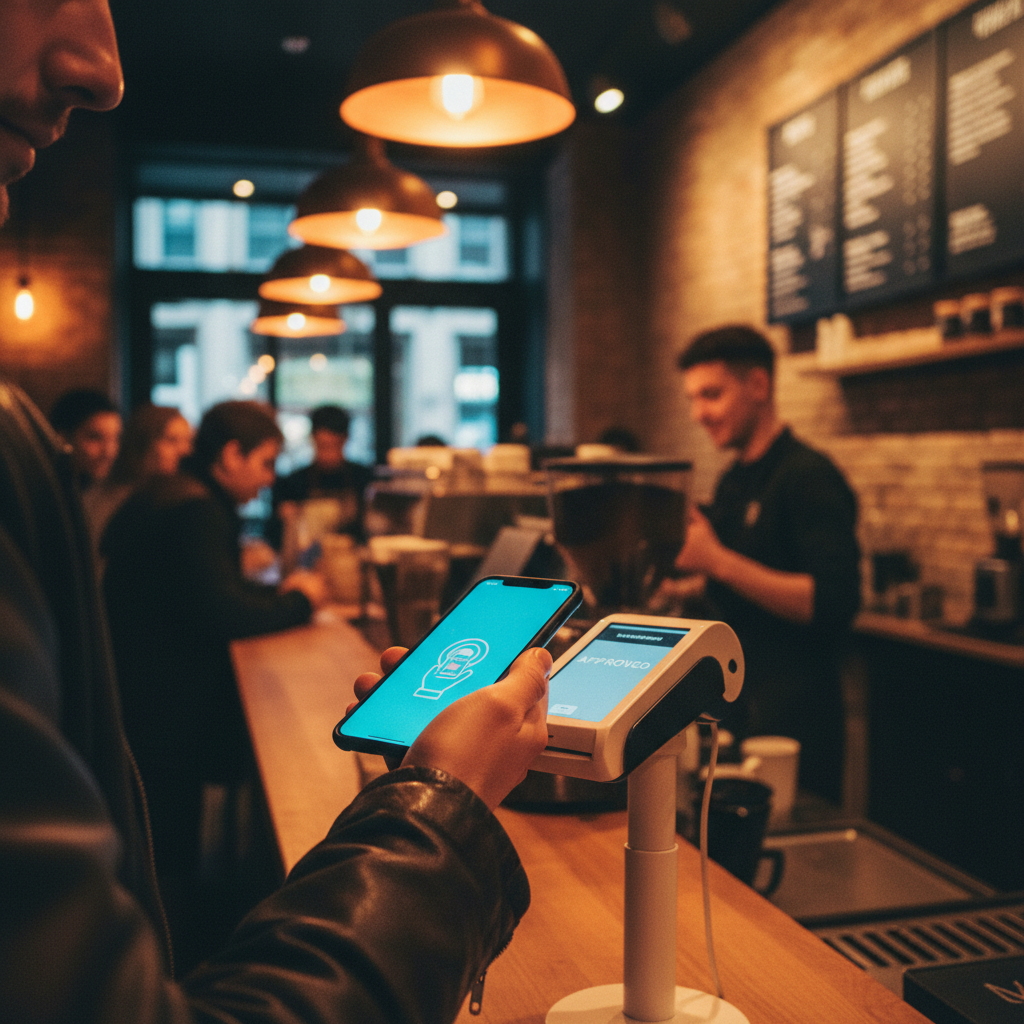
The user journey within a Blockchain Loyalty Program for Small Businesses is designed to be frictionless, mirroring the speed and convenience of modern mobile payments. Imagine a customer finishing a meal at a local bistro in Esposende. As they pay at the terminal, the transaction triggers a smart contract on the backend. Within seconds, a notification appears on their smartphone confirming that RONET tokens have been deposited. There are no physical cards to scan and no manual stamps to collect.
This interaction centers on the digital wallet, a secure application that acts as a personal hub for all earned rewards. Inside the wallet, the customer sees their balance update in real time. These are not just abstract points trapped in a single shop's database; they are verifiable digital assets. Because RONIN operates a shared digital rewards ecosystem, that same wallet displays rewards earned from the gym, the local café, and the boutique down the street.
The experience feels tangible because the rewards have utility across a growing international network. A customer can track their progress toward a free coffee or a discounted gym session with the same clarity they use to check a bank balance. By focusing on this high quality user experience, merchants can ensure that about the RONIN network remains a preferred tool for daily use. This seamless integration is why we encourage entrepreneurs to become a country partner and bring this intuitive technology to new markets.
Implementing Blockchain Loyalty: A Roadmap for Small Business Owners

Moving from theory to execution requires a structured approach that prioritizes operational simplicity over technical complexity. A Blockchain Loyalty Program for Small Businesses should integrate seamlessly into your existing workflow without requiring a complete overhaul of your daily routines. For a merchant in Esposende or Braga, the transition is less about mastering code and more about strategic alignment.
Define Clear Objectives: Start by identifying the specific behavior you want to incentivize. Are you looking to increase the average ticket size per transaction, or is your primary goal to drive foot traffic during slower midweek periods? Defining whether you will reward total spend, frequent visits, or successful customer referrals ensures your token distribution aligns with your specific profit margins.
Join an Established Infrastructure: Building a proprietary blockchain solution is cost prohibitive for most independent merchants. Instead, leverage a shared digital rewards ecosystem like RONIN. By plugging into an existing network, you benefit from pre-built digital wallets and a verified security framework. You can read more about the RONIN network to see how our no-code tools handle the backend management for you.
Empower Your Team: Your staff is the primary bridge between the technology and the customer. Train your team to mention rewards naturally during the payment process. A simple prompt like, "Would you like to earn RONET on this purchase?" is often all that is needed to initiate a high value interaction.
Signal Innovation: Use physical and digital signage to highlight your status as a Founding Merchant. This positions your business as a forward-thinking leader in the local community, attracting tech-savvy consumers who value digital ownership.
Simplicity is the most important factor in the early stages of adoption. Focus on making the earning process as fast as possible for the customer. As your local network grows, you might even explore opportunities to become a country partner to help lead the expansion of this decentralized infrastructure across your entire region.
Implementing a blockchain loyalty program represents a significant step toward securing the longevity of your small business. By prioritizing transparency and security, you create a rewards ecosystem that resonates with modern consumers. If you want expert help strategizing your digital transition, our team is available to provide the necessary guidance. Please read more About our mission and our approach to see how we help businesses navigate the complexities of decentralized technology. We look forward to helping you turn these possibilities into a functional reality for your brand.