
Customer Rewards on Blockchain transform traditional loyalty programs by utilizing decentralized networks to enhance security, reduce operational costs, and enable real-time reward distribution. This technology allows customers to manage their points as liquid digital assets through a single wallet; consequently, it creates a more transparent and interoperable ecosystem for both businesses and consumers.
Traditional loyalty programs are failing under the weight of their own friction. Shoppers are tired of fragmented ecosystems, expiring points, and restricted redemption options that offer little real-world value. For the business owner, these programs often become administrative burdens rather than growth engines. Blockchain technology eliminates these inefficiencies by transforming loyalty into a liquid, interoperable asset class. This shift represents the move from closed-loop databases to open-source value. In this guide, we analyze the structural flaws of legacy rewards and detail how blockchain protocols facilitate seamless shopper experiences. You will discover the practical benefits of decentralized loyalty networks, the financial upside of tokenized incentives, and a clear roadmap for transitioning your business to this next-generation infrastructure.
The Problem with Traditional Loyalty Points: Why Friction Kills Growth

Traditional loyalty programs are fundamentally siloed. For a local business owner in Esposende or Braga, the current options are often limited to physical punch cards or expensive, standalone apps. These walled gardens force customers to manage dozens of different accounts, most of which lead to forgotten points and expired rewards. This friction does not just annoy the shopper; it kills the growth of the business by making the reward feel like a chore rather than a benefit.
Small businesses face a unique hurdle. Developing a custom loyalty app is prohibitively expensive; furthermore, asking a customer to download a separate application just for one cafe or gym creates an immediate barrier to entry. Even when a customer does participate, their rewards are trapped. Points earned at a local restaurant cannot be used at the boutique next door, creating a fragmented experience that lacks real-world utility. For the merchant, these unredeemed points sit on the balance sheet as a growing liability, never providing the intended return on investment.
Implementing Customer Rewards on Blockchain is a strategic necessity to solve these systemic failures. By moving rewards from a private, isolated database to a decentralized reward network, we remove the boundaries that limit growth. In this model, rewards are no longer just entries in a shop's ledger; they are portable digital assets. This shift allows a local shop in Portugal to offer the same level of sophistication as a global chain while participating in a larger, shared ecosystem. You can learn more about our mission to fix these broken legacy systems and create a fluid infrastructure for local commerce.
What Are Customer Rewards on Blockchain?

At its simplest, Customer Rewards on Blockchain represent a fundamental shift from owning a promise to owning a digital asset. In a traditional loyalty program, your points are merely rows in a merchant’s private database; the business retains total control over the value, expiration, and utility of those entries. When these rewards are tokenized, they become distinct digital assets that exist on a shared ledger. This means the customer, rather than the business, truly owns the reward.
This infrastructure rests on three core pillars that differentiate it from legacy systems:
Transparency: Every reward issued and redeemed is recorded on the blockchain. The rules of the loyalty program are coded into smart contracts, ensuring that points cannot be arbitrarily devalued or removed without cause.
Security: Using decentralized technology ensures that rewards are protected against fraud or server failures. Because the assets are cryptographically secured, they cannot be duplicated or falsified.
Portability: This is the ability for a reward to move. Unlike siloed points, tokens are designed to function across a decentralized reward network, allowing value earned at one location to be recognized at another.
By treating loyalty as a tangible asset, tokenization makes a reward feel real to the consumer. It moves the experience away from a company-controlled ledger and into a flexible ecosystem where the customer has genuine agency over their accumulated value.
How Blockchain Rewards Work for the Average Shopper
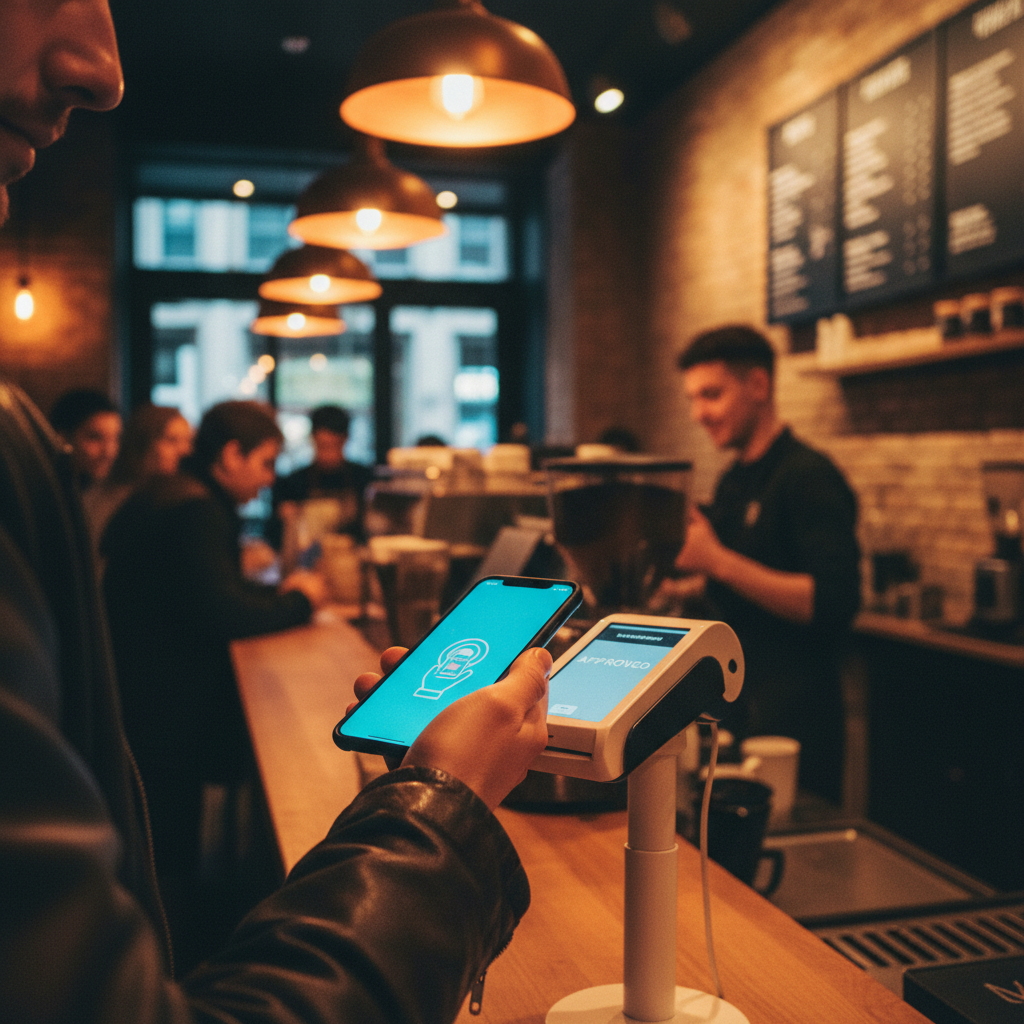
For the average shopper in Esposende or Braga, the transition to blockchain rewards does not require technical knowledge or a change in daily habits. When addressing the common question, "What are the rewards in blockchain?" the answer is found in the RONET token. These tokens are digital assets that act as a unified currency of loyalty within a specific ecosystem. The process is straightforward and begins at the point of sale. Imagine ordering an espresso at your favorite local cafe in Esposende. Instead of receiving a paper stamp or a digital point locked in a proprietary app, you receive RONET tokens directly into a streamlined digital wallet on your phone.
The practical advantage of Customer Rewards on Blockchain becomes clear during the redemption phase. Because these rewards exist on a decentralized reward network, they are not tethered to the coffee shop where they were earned. You can finish your coffee, walk to a partner gym in Braga, or visit a restaurant along the Cávado River, and use those same tokens to offset the cost of a workout or a meal. The blockchain serves as a silent, secure ledger that validates these transactions instantly, ensuring every merchant in the network recognizes the value of your accumulated rewards.
This system is built to be frictionless, keeping the technical complexity entirely in the background. The shopper interacts with a familiar, user friendly interface while the blockchain handles the security and asset transfer. By removing the silos of traditional loyalty programs, RONIN ensures that your rewards possess real world utility and immediate purchasing power, transforming a simple morning coffee into a flexible asset that works across your entire local lifestyle.
The Hidden Business Benefits: Beyond the Token

For a business owner, the transition to Customer Rewards on Blockchain is a strategic move that addresses a significant accounting headache: unredeemed points. In traditional systems, every point issued represents a growing liability on your balance sheet, a debt to the customer that may never be settled but must be tracked indefinitely. By moving to a tokenized model, this administrative burden vanishes. Once a merchant issues a token, it is a finalized digital asset. The smart contract handles the validity and transfer, allowing you to focus on operations rather than managing a private ledger of outstanding debt.
Beyond accounting, the most compelling advantage is the transition from a siloed shop to a node in a shared ecosystem. When a local boutique in Esposende joins a decentralized reward network, they are no longer competing for loyalty in a vacuum. Instead, they benefit from the foot traffic and spending power generated by every other partner in the network. If a customer earns tokens at a gym in Braga and chooses to spend them at your café, you have acquired a new customer facilitated by the network. This cross-pollination ensures that the value stays within the ecosystem, incentivizing local shoppers to frequent RONIN-affiliated businesses over global chains that lack this interoperability.
There is also a significant strategic advantage for those who join during the initial rollout. We refer to these early adopters as Founding Merchants. By entering the network early, businesses gain a higher degree of influence over the local infrastructure and the way the ecosystem evolves in their region. This is particularly relevant for those looking to become a country partner or lead a local cluster of shops. Early participation ensures your business is positioned at the center of this new global infrastructure, leveraging a sophisticated reward system that was previously only accessible to multi-national corporations.
Can I Earn Money from Blockchain Loyalty?
The question of "earning" is common when blockchain is involved, but it is essential to distinguish between speculative investing and consumer utility. Customer Rewards on Blockchain are not designed as financial instruments for speculation; instead, they function as a store of real-world value. When you receive RONET tokens for your patronage at a local shop, you are earning a digital asset that carries tangible purchasing power within a decentralized reward network.
Unlike traditional crypto investments where users buy assets hoping for market fluctuations, these loyalty tokens are earned through your existing spending habits. The value is realized through their portability across different business sectors.
Direct Utility: Tokens are applied toward purchases at partner establishments.
Asset Ownership: Users hold the keys to their rewards; the value cannot be revoked by a merchant.
Network Value: Your rewards grow in usefulness as more shops join the ecosystem.
Accumulating these rewards allows you to build a balance of spendable assets that reduces out-of-pocket costs. It is a transition from earning temporary store credit to owning a portable, digital asset.
Building the First Global Loyalty Infrastructure from Esposende
RONIN started in Esposende with a clear objective: to build the first global loyalty infrastructure that functions for local, real world businesses. While many digital assets remain trapped in speculative cycles, our focus is on bridging the gap between tangible services and digital value. We are currently establishing this foundation in the Braga region, connecting restaurants, cafes, gyms, and boutiques into a unified decentralized reward network. By utilizing the RONET token, these businesses provide their customers with a reward that is both ownable and internationally portable.
Our platform is not a mere crypto project; it is a practical utility designed for the merchant on the corner. We provide the technical backbone that allows a neighborhood gym to offer the same level of loyalty sophistication as a global franchise. As we scale from our roots in Portugal, we are actively seeking entrepreneurs who wish to become a country partner to help manage and grow these networks in new territories. This expansion ensures that Customer Rewards on Blockchain become a standardized tool for local commerce worldwide. You can read more about our mission to replace fragmented, legacy points systems with a secure, transparent infrastructure that empowers both the business owner and the everyday shopper.
How to Transition Your Business to a Blockchain Loyalty Model
Transitioning to a modernized loyalty model involves a strategic shift in how you define and distribute value. Instead of issuing proprietary points that act as isolated store credit, you are adopting a standardized digital asset. This process requires a focus on infrastructure rather than just marketing.
First, integrate your point of sale with the RONIN framework to begin issuing RONET tokens. This step replaces the administrative burden of tracking internal databases with an automated, transparent ledger. Second, reframe your communication with customers. Avoid technical jargon like "cryptography" or "distributed ledgers." Instead, inform your regulars that these rewards are digital assets they truly own. Emphasize that these rewards never expire and, most importantly, possess utility beyond your own four walls.
Focus on the community aspect to drive engagement. A shop owner in Esposende can explain the transition by saying, "This reward works here and at your favorite spots across town." This positioning transforms your business from an isolated shop into a vital node in a decentralized reward network. By highlighting the collective value of the ecosystem, you provide a more compelling reason for customers to return. Businesses looking to lead this transition at a larger scale can become a country partner to help shape the local infrastructure. This shift is a core part of about our mission to ensure Customer Rewards on Blockchain provide tangible, long term value for the local economy.
Blockchain technology is reshaping how local businesses connect with their customers through secure, transparent reward systems. By leveraging decentralized networks, communities can build loyalty programs that are both flexible and resilient for the long term. Transitioning to these advanced digital systems can be complex; therefore, if you want expert help navigating this new landscape, we are here to assist. You can learn more about our mission to see how we help businesses integrate these innovative solutions effectively.